For immediate release August 27, 2026
Media contacts:
- Greta Anderson, Western Watersheds Project (520)623-1878; greta@westernwatersheds.org
- Regan Downey, Wolf Conservation Center (914)763-2373; regan@nywolf.org
- Leia Barnett, WildEarth Guardians, (970)406-2125; lbarnett@wildearthguardians.
org - Sandy Bahr, Sierra Club Grand Canyon Chapter, (602) 999-5790, sandy.bahr@sierraclub.org
- Michelle Lute, Wildlife for All, (505) 552-2501, michelle@wildlifeforall.us
- Claire Musser, Grand Canyon Wolf Recovery Project, (928) 202-1325, claire@gcwolfrecovery.org
- Sally Paez, New Mexico Wild, (505) 350-0664, sally@nmwild.org
Mexican Gray Wolves Being Moved and Killed for Problem Grazing Operations
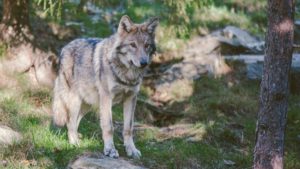
TUCSON, Ariz. – The U.S. Fish and Wildlife has recently authorized the removal of two highly-imperiled Mexican gray wolves from grazing allotments that experience habitual conflict. One of the orders recommends translocation to Mexico and the other order permits lethal removal. Each of the orders demonstrates that the grazing allotments at issue have repeated, ongoing conflicts.
“When you see allotments with chronic wolf and livestock conflict, it is time to ask whether there is something different the livestock operator could be doing to minimize the conflict,” said Greta Anderson, deputy director of Western Watersheds Project. “In fact, one of the orders mentions that a lethal removal was already executed in this area in May 2026 but only temporarily reduced depredations. So why is the government continuing to kill wolves if it doesn’t work to halt livestock losses?”
It is unclear from the redacted copies of the removal orders which wolf packs or individuals are being targeted, and apparently no consideration is given to the genetic value of wolves unless the wolves are considered “foster wolves,” that is, puppies born in captivity and placed into wild dens. The removal orders permit the removal of unidentified, uncollared wolves, so the importance of those individuals to the population and its genetic viability cannot even be assessed before the removals occur. One removal order specifies that the rancher is not interested in proactive management from the Interagency Field Team on private or state trust lands.
“Killing wolves is never the solution to conflict, especially when non-lethal hazing is unable to be deployed due to rancher refusal or rugged terrain. The removal orders detail steep ridges and deep canyons that make hazing impractical – so why are cows there? These remote allotments aren’t suitable for livestock, but they are suitable for wild wolves,” said Regan Downey, director of education and advocacy at the Wolf Conservation Center. “A native, endangered species should not be killed to benefit private business owners.”
“These removal orders continue to demonstrate our wildlife management agencies’ willingness to kowtow to the livestock industry and implement bad management practices that harm the recovery of Mexican gray wolves,” said Leia Barnett, New Mexico Conservation Lead for WildEarth Guardians. “We’re long overdue for meaningful policy reform that reflects how much New Mexicans value our lobos, instead of perpetually issuing these license-to-kill orders to a private industry that’s profiting off of a public resource.”
“It is time for the federal government to demand responsibility from livestock interests who are grazing on public lands at very low rates and who get compensated for impacts from wolves, plus who have access to funding for measures to limit conflicts with wolves,” said Sandy Bahr, director for Sierra Club Grand Canyon Chapter. “If the livestock interests are unwilling to live with wildlife, then perhaps they should lose their grazing privileges. Fish and Wildlife needs to allow endangered Mexican wolves to actually recover and thrive to support healthy lands and wildlife populations and livestock interests should accommodate that as a condition of grazing on public lands.”
“This is a failure of wildlife management, not a failure of Mexican wolves,” said Michelle Lute, PhD in wolf conservation and executive director of Wildlife for All. “When agencies repeatedly respond to chronic conflict by removing wolves—even after previous removals have failed to resolve it—we are treating the symptom instead of changing the system that produces the conflict. Recovery requires a different approach: one that makes coexistence and conflict prevention the standard, rather than making an endangered species pay the price for management failures.”
“When conflict keeps happening in the same places, repeatedly removing wolves is not a solution; it is a sign that we need to change what we are doing on the ground,” said Claire Musser, executive director of the Grand Canyon Wolf Recovery Project. “We know that proactive, adaptive conflict prevention can protect livestock while allowing wolves to remain on the landscape. Mexican gray wolf recovery cannot succeed if wolves continue to pay the price for preventable conflict. We need to invest in working with livestock producers before conflicts occur, rather than waiting until the only options being considered are moving or killing wolves.”
“Preventing conflict with endangered Mexican gray wolves is a shared responsibility,” said Sally Paez, staff attorney with New Mexico Wild. “New Mexicans deeply value our state’s wildlife, and protecting native predators is important to maintaining healthy, balanced ecosystems. Livestock operators should be required to consistently implement practical conflict-prevention measures, and wildlife managers should act early with proactive management and effective non-lethal tools to promote coexistence with wildlife.”
###