For Immediate Release: September 10, 2026
Contact:
- Delaney Rudy, Western Watersheds Project, 970-648-4241, delaney@westernwatersheds.org
- Samantha Miller, Center for Biological Diversity, 970-531-6720, smiller@biologicaldiversity.
org - Jen Clanahan, Colorado Nature League, 303-775-3539, jen@conatureleague.org
- Delia Malone, ColoradoWild, 970-319-9498, delia.malone@coloradowild.net
CPW Announces its Killing of Third Yearling Wolf in Three Days
The agency announced its killing of two yearlings on Monday, and the killing of another yearling female today.
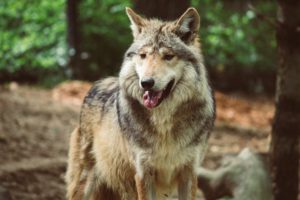
DENVER — Colorado Parks and Wildlife (CPW) announced this morning that officers killed a yearling wolf yesterday, September 9. The killing of this wolf, a yearling female from the One Ear pack in Grand County, followed the CPW killings of two other yearling wolves in Rio Blanco and Pitkin County that were carried out on Monday, September 7.
Earlier this year, Parks and Wildlife killed a yearling male from the One Ear pack on August 4, 2026, after several livestock conflicts in the pack’s home range. Crucially, conflicts took place on remote pastures and public land grazing allotments and the ranchers and CPW could not confirm which individual wolf was involved in conflicts. The agency killed a first yearling wolf from the One Ear pack at random in August, and when conflicts continued, killed the second yearling wolf yesterday.
“Events like these on the ground, and the scientific record, continue to show that lethal control is ineffective at ending livestock conflicts, yet agency wolf-killing is rampant,” said Delaney Rudy, Colorado Director for Western Watersheds Project. “CPW is showing itself more committed to doing ranchers’ bidding than to endangered species recovery.”
In order to be considered chronically depredating, a wolf has to be involved in three conflicts with livestock within a 30‑day period, but the requirement is that only one of the depredation events must have clear and convincing evidence that it was caused by wolves. In March, the Center for Biological Diversity submitted a petition to the CPW Commission to reform the standards for chronic depredation. The commission has not yet heard the petition.
“Colorado can’t keep killing wolves when it already has so few left and no additional reintroductions are in sight,” said Samantha Miller, a senior carnivore campaigner at the Center for Biological Diversity. “Killing three endangered wolves in a single week amounts to internal sabotage by an agency that’s failing to take its responsibility for wolf recovery seriously.”
“The fact that CPW has gone back multiple times to kill wolves in the same pack raises the question of the effectiveness of lethal removal,” said Jen Clanahan, Executive Director of the Colorado Nature League. “Furthermore one has to wonder, have they confirmed which wolf was involved in the conflict to ensure that they are removing the correct wolf?”
“The war on wolves continues with the state-sanctioned killing of Colorado’s Endangered wolves,” said Delia Malone, ecologist and Board President of ColoradoWild. “Decades of experience from ranchers in the Northern Rockies documents that wolves and livestock can coexist – but only if ranchers are willing to prevent conflict by responsibly managing their livestock. Ranchers have been provided the tools to prevent conflict – now they must use them. Colorado has a statutory obligation to restore a sustainable population of wolves to Colorado but CPW’s lethal actions are undermining wolf recovery in our state.”
According to CPW’s report on the August 4 killing, three calves had been injured in the One Ear pack territory over the course of 30 days. None of the calves were killed. Collar data did not place a collared wolf in the immediate area of two of the conflicts at the suspected time of injury, but because the pack had at least 4 uncollared yearling wolves, CPW decided to kill one of those wolves. When the conflict continued, they killed the second yearling yesterday.
A study published in July reviewing analyses of wolf conflict across five countries found that killing wolves in response to livestock conflict sometimes had the desired effect, but typically had no effect, and more often killing wolves had the counter-productive undesirable effect of elevating livestock losses.
###
Western Watersheds Project (WWP) is a non-profit organization with more than 50,000 members and supporters. WWP’s mission is to protect and restore western watersheds and wildlife through education, public policy initiatives, and legal advocacy. WWP works to ensure that public lands and their wildlife, cultural, and natural resources are protected for future generations.